Monday, November 14, 2005

A Short Reply to India's Anonymous Commenter

I am glad that the anonymous commenter left his/her thoughts about the caste system in India and elsewhere.  Anonymous brought up many issues for thought, and before I continue with the description of the trip to India, I want to address some of the concerns that have been brought up.

First off, I want to assure Mr. Anonymous that I want India to prosper and be successful.  If I could snap my fingers and make poverty go away, I would do so in a heartbeat.  As for why I don’t bring up the “caste system” in the Philippines or Brazil or elsewhere, it is because I am unaware that it exists.  And if it does, let me go on record as saying that I hate it there as well.  The reason I did not mention Japan’s cast system or some other system is because I did not just return from those countries.  Fair enough?  I’m not going to defend discrimination of any kind based on race, creed, or tribe in any country or religion.

For the non-Indian readers of this blog, I ask you to please read the comment that anonymous left.  I believe that you will find them insightful as to the attitudes of some in India towards the West.  In his comment, anonymous insinuates that it was an “Aryan group” from central Asia that made up the caste system and Hinduism.  Further, it is said that Hugo Chavez is feared because he is upsetting “the Christian caste system.”

I grieve that the word ‘Christian’ can even be used to modify the word ‘caste’ in anyone’s mind, but anonymous certainly believes it.  There is nothing Christian about the caste system; it is evil.  You cannot support it from Christian Scripture.  The good news of Jesus Christ overthrows discrimination; it certainly does not condone it.  Jesus Christ came to set men and women free from sin and its penalty.  Further, the fact that God became man elevates the status of every man, woman, and child on this planet.  Jesus was born as a poor carpenter’s son from Nazareth.  There is simply no way that a Christian can excuse prejudice of based on birth or privilege.

But I want to make a point that Anonymous did not address.  Really, all he has done is attempt to distract from the issue.  The fact of the matter is that discrimination is apparent and obvious in India, despite Mr. Anonymous’ protests.  It does no good to point to another country and ask us to decry unfair treatment there.  We’re dealing with India where the caste system is alive and well.  

What bothers me is that I saw persecution of Indian Christians by Indian Hindus on Indian soil and I saw that the Indian government was reluctant to prevent it.  I know for certain that much of this persecution comes because many are jealous that the Christians are taking outcaste orphans, caring for them, educating them, and elevating their status.  I also saw that Hindus were angry because people, of their own will, were converting to Christianity because of the truth about the life, death, and resurrection of Jesus Christ.

What makes me sorrowful is that Mr. Anonymous and others in India associate Christianity with the un-Christian conduct of the British and others during colonial rule.  What Mr. Anonymous seems to forget is that my country was once a colony as well, and that religious freedom was one of the founding impulses of this country.  Legally, Christians have religious freedom to an extent.  Practically, they are persecuted, beaten, ostracized, and some have been killed.

The bottom line is that the caste system is just another expression of human sinfulness.  It is simply another form of discrimination, and discrimination is common to every country, culture, and nation.  But it was worse in India than I have ever seen, even in South Louisiana.  

Finally, Mr. Anonymous asks what I will say when India is richer than other countries.  I will say, “Hooray for India!”  And, I will cheer for their cricket team.  I hope that India prospers; I truly do.  But my greatest concern is that Christians are allowed to practice their religion without fear of abuse, and that they can evangelize and share their faith without fear of retribution.

Friday, November 11, 2005

A Rebuttal to My Impressions

I have been getting a good amount of traffic from an Indian Discussion Forum, so I thought that I would address some of the issues brought up there. First of all, I am thankful that you came. The comment bar is open for your thoughts, and as long as you keep the language clean, whatever you say will stay. Secondly, I want to say that what I am saying are only my thoughts and impressions, not those of any other person or persons.

A writer from that forum takes me to task for my assessment of the Hindu caste system. The justification of the oppression that occurs because of that system seems to be that white people are worse at "caste" than Indians. Or at least that a white person should not open his or her mouth about the caste system because we do it in a worse way, and that white people have historically suppressed people of other races. This is a fallacious ad hominem attack, but I will go with what is presented.

Here is an example of what this writer has to say:

The Christian caste system is so much superior. Sure, Dalit Christians have to stand in a separate line to get into church, but you know it's superior to Hindus.
So how does this poverty = caste system. He must know something that most Indians don't, he seems to actually know the caste of people by looking at them.

The Phillipines is an example of Christian superiority, where slums house Jesus followers. The author conveniently forgets to mention Brazil's Casta system. Anyone else notice the caste system in Latin America where White leaders rule over hordes of poor natives/non white races. Vincente Fox a White Irish guy (White's are 7% of Mexico) rules over a country that's 92% non white!
This is what they want for India, make no mistake about it.


First thing I want to deal with is the accussation that Dalit Christians (A Dalit is the lowest of the castes) have to stand in a seperate line to attend Church. I never observed this, but I cannot speak for every Church in India. I know for certain that this is not the case with the ministry that I was associated with, and that great pains are taken to make certain that people from all backgrounds are treated with equal respect.

Secondly, I cannot tell caste by looking, nor can anyone else. But to pretend that people are not relagated to poverty because of their caste is even more naive than such an assertion. I daresay that no one would attempt to argue the contrary.

Thirdly, it is true that some "Jesus Followers" live in slums. In point of fact, some of the pastors I met chose to live in such places in order to minister to the needs of that community. They serve the lepers as well. I am not upset simply at the poverty; it is no crime to be poor. What I find revolting is the oppression instigated by the caste system, and the resistance to the poor bettering themselves that I encountered in India. I would oppose this regardless of race, religion, or country, as does the gospel of Jesus Christ. I did not forget the "casta" system of Brazil...I was there far longer than I was in India, and I have closer friends from that country. It is that I never observed it even once. I do not even know if it exists. If it does, it is shameful. But I can tell you that if it does, it is negligible compared to the blatant discrimination found in India.

Fourthly, it is asserted that white people wish to take over India just as they have other countries. For the record, I have no ambition to see any white guys running India. I certainly did not leave my family and go to the poor of India to instigate some sort of ridiculous "whitey" take over.

The reason that there is no caste system in Christianity is because the Bible teaches plainly that every man, woman and child is made in the image of God. That levels the ground. I am not superior to any Dalit in India, nor am I inferior to any Brahmin. The Bible teaches "For you are all sons of God through faith in Christ Jesus...There is neither Jew nor Greek, there is neither slave nor free, there is neither male nor female; for you are all one in Christ Jesus" (Galatians 3:26, 28). God is no respecter of persons according to birth, intelligence, wealth, race, or country. We are all share in the image of God. Any people who come short of this ideal, whether they be Hindu or Christian, fall short of the truth of God's Word.

Let me close this by adding that while I was in India I witnessed the persecution of Christians. My own life was threatened on a visit to a certain city in India to the point that I and my comrades were escorted out of town under police protection. The militant Hindus surrounded the bus going in to the pastor's conference, armed with staffs, in order to intimidate Indian Christians. Last year, many of the pastors were beaten. I know for certain that over the past thirty years, some pastors have been killed.

The reason is not very complicated. One is that certain Hindus do not like it when other Hindus convert to Christianity. Further, some in India find it hard to deal with the fact that Christians are taking orphan children, dalit children, low caste children, and they are raising them and loving them. They teach them that they are made in the image of God and that they can do or be whatever they wish. They can be doctors or lawyers or farmers or anything. Certain people do not like to see people elevated above their perceived station. So, they persecute them to "keep them in line." This is not an issue of white people oppressing Indians. This is an issue of Indians oppressing Indians. Actually, what I observed were Indian Hindus oppressing Indian Christians.

Hopefully some of the visitors from the forum will leave their input here. It would certainly be enlightening for many of the readers of this blog. As I said, if you keep the language clean, your comments are welcome and desired. I look forward to hearing from you.

The Next Leg of the Mission


The next day was an odd experience for me. I have often woke up and been disoriented. That is, when you wake up in a strange environment, it takes you a moment to get your bearings. This, however, was the first time I have ever woken up and not known "when" I was. It would take me two more days to figure out which day it was. It's weird being halfway around the world.

We had a fine breakfast complements of Samuel Thomas. He is the current president of Emmanuel Ministries and the American side, Hopegivers Ministries. You can check out their website at Hopegivers. Hopefully, you will come to believe that this is a worthy ministry as I have; maybe some of you will even become supporters. Samuel came down from Kota to greet us. He also brought another pastor from Delhi named Baboo CJ. Samuel is the son of M.A. Thomas and has known Bro. Terral since he was a small child. It was a happy reunion.

From there, we caught a flight to the state of Goa. Goa is an extremely interesting state. It is the smallest in India, and it was a Portuguese colony until the 1960's. England pulled out of India in 1947, give or take a year, so Goa remained under Portuguese influence a little longer. Goa itself is a beautiful state, perhaps the most beautiful in India. Because of this, it is an attractive vacation spot. Once again our accommodations were top-notch and very inexpensive. I hardly felt like I was on a mission trip at all.

There is a reason why Goa is the home of the Bible College that Bro. Jason Job is directing, and it is not just because the place is beautiful. Because the area is so rich with tourists, it is a little easier to bring in professors there from overseas. The visas are easier to come by, and less questions are asked. Further, the area is more Christian than others, though Bro. Job lamented that it was easier to talk to a Hindu about Christ than a Catholic. It is a good situation for the school and for the teachers, and I considered it a haven, a small, wonderful outpost for the kingdom of God. The poverty in Goa is not nearly as apparent, and the standard of living was much better.

My reason for being there was to meet Bro. Job, and I was asked to speak at the Bible College graduation. There were about thirty graduates. Most of them men heading into the ministry, some were pastor's wives receiving training. They were from all over India. This college in Goa is actually only a nine week training institute; it is more like an extended seminar. The students were glad for the opportunity for study and fellowship.

Since the students more or less spoke English, I was able to preach without an interpreter. That is a blessing. As I stood to speak, I knew full well the type of situation most of these men were going to. Many were going to cities with almost no Christian work to speak of. Many would be or had already been persecuted for their faith. What do you say to such a crowd? Why would God privilege me to speak to such a group. I was overwhelmed.

This is the text I chose for the night, and I confess that it is my heart:

"I thank my God upon every remebrance of you, always in every prayer of mine making request for you all with joy, for your fellowship in the gospel from the first day until now, being confident of this very thing, that He who has begun a good work in you will complete it until the day of Jesus Christ" (Philippians 1:3-6).

As I spoke, I asked the Lord to be merciful to me and help me remembered those faces and remember their struggles. I asked Him to remind me to pray for them. I asked for Him to remind me that we are partners for the kingdom, and that they are dear brothers and sisters called to a task for which I have not yet been found worthy. They will suffer in ways that I will not. Though I have training for the ministry that they could not begin to dream of, God has called them to a task that I might not be able to handle. One would almost despair for them in their hardships if it were not for verse 6. My final prayer as I spoke was that God would remind me again and again and again that what He starts, He finishes.

After the graduation, we were treated to a great meal of curry and rice. Perhaps you have heard that Indian food is spicy. I am here to tell you that the half of it has not been told to you. I believe that even the coffee is spicy in India. I am judging by South Louisiana standards, and they are no slouches when it comes to spice.

Before we left Goa we went to visit Jason Job and his wife at their home. I suppose their home has around 3,000 square feet. In that home, they take care of nine orphans and their two children. This is the second home that they have lived in while staying in Goa. They rent, and when the landlords find out that they are Christians and that they have orphans there, they will not renew their lease. As you can imagine, this is a terrible strain. Almost every year pastors such as Bro. Jason Job have to find a home that they can afford and that is large enough to accommodate the children. I pray that the Lord will grant Bro. Jason enough money to buy a place to set up. It is not only inconvenient for him to move, but also for the small church that meets in his home. They currently have around 20 members.

I have walked on the shores of Arabian Sea of India, and I have met the believers there. But more wonderful than the Sea and the scenery there are the men and women who labor there for the sake of Jesus Christ, who struggle in a dark place to reveal His bright light. Please pray for the church of God in Goa, and for the work that they are building there.

Thursday, November 10, 2005

First Impressions of India


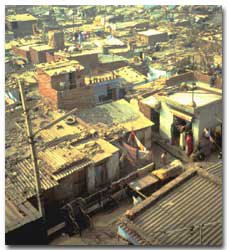
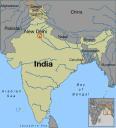
After thirty hours of travel, my plane landed in Bombay (Mumbai) India. Nothing in my personal, missionary, television watching experience had prepared me for what I would see there. The only word that I know that comes close is squalor.

The way the Bombay airport is designed, I had to actually exit the airport in order to rendez-vous with the other two men that I would travel with. We had to come on seperate planes because of a price issue with the airline. Fortunately, they only arrived 15 minutes after me. Unfortunately, I had to take my first steps in India virtually unguided.

The first thing that you notice in Bombay is the smell. I caught the fragrance before I ever exited the terminal. It smells like sewage. I was told that of the 19 million people who live in Bombay, 10 million of them live in slums. I believe it. I could see what looked like miles of slums from the plane. The people use the street as their bathroom. Some places literally smell like a latrine.

The second thing that you notice in Bombay is the mass of people. People are everywhere. They are crowded together like stacked wood. I can't imagine how they live in such conditions. Many of the people that you see beg for their food. From the time that I left the terminal, to the time that I found my friends, to the time that I got into the car, I was thronged by hungry little boys. They touch your hand and pull your shirt. They bring there hands to their mouths and they grunt. They are begging for money for food. Their "beggar pimps" watch them like a hawk. Give any one of them a dime, and it will promptly be confiscated.

I was relived to find my traveling companions. They were men who had been to India multiple times. They knew how to negotiate the city. When I found them I also found our guide for the day. His name is Matthew. Matthew is a pastor just outside of Bombay. He pastors a small church and takes care of around 11 orphans. He takes care of these children with his wife. They do the cooking, the cleaning, the wash, and everything. Of course, the children help, but the adults do most of the work, and they shoulder the financial burden. Matthew works with Emmanuel Ministries.

Another thing that shocks you about India is the traffic. It is bumper to bumper and fender to fender. You see camels, cows, pigs, bicycles, scooters by the thousands, and just about anything else you can imagine wondering the nearly laneless roads. And they drive like maniacs. The horn is the only law on the street. When you hear it, you move or you get hit.

Matthew took us to our hotel. It was right across the street from a very large slum. I should take a little time to describe what a slum is. Mostly, these shanties are just three walls and a tin roof. They have dirt floors and no sewage. Everywhere you look there is garbage piled high. It looks like New Orleans after the hurricane. Yet people live there day after day.

The hotel that we had arrainged was a five star hotel. The contrast was incredible. It was, by far, the most luxurious hotel I have ever stayed in. The floors were all white marble. The decorations were exquisite. The beds were fabulous, and the view was...of a slum. Lavish living across from absolute poverty. This is the Inida I saw. It is a country of contrasts. By the way, the hotel cost me $80 a night. Not bad for five star accomadations. As I looked out the hotel window, I felt the guilt of privilege.

These are my first impressions of India. I do not know if they are fair, but this is how I felt. The poverty that I have seen in the USA, Brazil, and Portugal did not touch what I saw in India. It was overwhelming. What is worse is that I firmly believe that much of this physical poverty is due to the spiritual absurdity of the caste system. The caste system enslaves people to squalor. It is a part of the Hindu religion, and I hate it.

Tuesday, November 08, 2005

Introduction to the Mission

I should probably begin my reflections on India by telling you why I was there in the first place.  In a very real way, I was there because of a meeting of two men that took place in 1969.  One of the men was my traveling companion and is my grandfather-in-law, T.W. Terral.  The other man is M.A. Thomas.

M.A. Thomas, I believe, is originally from southern India.  As young man, he felt the call of God to go north to begin a church.  He and his wife obeyed that call, and so they began walking north.  Yes, I believe that they walked.  Their destination was a city in the state of Rajasthan called Kota.  

Upon arriving in Kota, Dr. Thomas was promptly beaten by a hostile mob.  His books were burned, and I think that his skull was cracked.  (I know that it has been broken twice, and I believe that it was at this time that it was first broken.)  Nevertheless, he remained obedient to God’s call and stayed in Kota with his family.  They handed out gospel tracks, lived on next to nothing, and saw a few people come to Jesus Christ.

It was a few years after this that Dr. Thomas and Bro. Terral met.  Bro. Terral was in India for a short mission trip, and he heard that a pastor in Kota would like someone to come and stay with him.  My grandfather agreed.

When Bro. Terral came, the church had grown to around nineteen members.  Bro. Terral remembers that they had a wonderful time of worship together.  As he and Dr. Thomas fellowshipped, Bro. Terral began to ask Dr. Thomas why he didn’t try to do church planting in other areas with other willing pastors.  Dr. Thomas said that he had never heard of church planting before, but for $25 a month, he believed he could sponsor a pastor to church plant.  Bro. Terral agreed to help with the money, and he pledged to return and help with crusades and to help meet any other needs that they might have.  A few years later, Dr. Thomas would begin an orphanage.  I believe that he supported nine of them at first.  They lived in a three-walled hut with a tin roof.

Every pastor that would subsequently be sent out by Dr. Thomas faced the same persecution that he and his family faced.  Most endured.  Some were actually martyred.  They all still face hostility today.  I have seen it with my own eyes.

On this trip, Bro. Terral and I and our other companion, Dr. Willie Greer, a pediatrician who has accompanied Bro. Terral on many trips since the early eighties, visited Dr. Thomas and some of those original orphans.  That small church of nineteen has spawned a national denomination which today has over 500,000 members.  The one church has become 20,800 churches.  Nineteen orphans has become over 10,000.  Some of those orphans now have orphanages and churches and Bible schools of their own.  It was quite the trip for my grandfather and for myself.

There is more to this grand partnership than I can here tell.  There has been more fruit than can be expressed in numbers.  As I relate the details of this trip, I hope that some of the story is more fleshed out for you.  It is an incredible story of the faithfulness of God, the grandness of Christian partnership, and the ability of the Church to thrive in a hostile environment.  I hope that you are challenged and encouraged by what you read of the men and women of God that I met in India.

So I Can Rest Medicine?

I wanted to begin on India today, but I have been sick still. My medication to knock out the bug I got in India actually makes me nauseous and dizzy. Isn't that ironic. Anyway, if I look at a computer screen for more than 20 seconds the room begins to spin. Will try again tomorrow.

Sunday, November 06, 2005

To The Faithful Remnant

Thank you all for staying around during my absence, and thank especially to those of you who prayed for us while we were in India. We had a wonderful trip. For me, it was eye-opening in many ways. I hope to document that in a series of posts here. I saw first hand the poverty of India, the hideousness of the caste system, persecution, and the bravery of our brothers and sisters in Christ in India.

I will try to begin that tomorrow. Today, I am taking it easy. The day after I returned home from India I became extremely ill. My temperature reached 104 degrees, so I went to the emergency room. I was admitted, and I only returned home today. I had eaten, drank, came into contact with something contaminated and contracted ecoli. I was not pleasent. They thought I had cholera. Please continue to pray for me. I am still pretty weak. Thanks again for not utterly abandoning the place while I was away. I look forward to sharing with you about the work in India.

Tuesday, October 25, 2005

Quick Update from India

So far, things are going very well here in India. It has been quite an eye opening experience on many levels. Today I had the privilege of preaching to a group of bible college students in the city I am in. It was a very encouraging and humbling experience.

Tomorrow we will be headed for the city of Kota which is in the state of Rajasthan (A state of 50 million people.) There, we will be attending a pastor's conference. There will be thousands of our brothers and sisters present, please pray for us. Seriously pray for us.

Last time the pastors met in Kota, there was a great deal of persecution. Many of the pastors were beaten by militant Hindus. I am not in as great a danger as the national pastors. Most of the attacks occur on trains and places in which I will not be. Pray for these men of God that they will be safe. The enemy is doing everything that he can to shut this great work down. I have seen and heard it with my own eyes. I hope to write about my experiences in more detail when this is over. Until then, I simply ask you to pray that God will cloak us with humility and fill us with boldness that we may open our mouths to speak the gospel, as we should.

Thank you for continuing to check for updates, and please continue to pray for us.

Thursday, October 20, 2005

The Importance of Missionary Endeavor


It is often objected that there are enough lost people in the United States to keep a minister busy. Why then should he waste precious time and resources overseas? The objection is, of course, ridiculous, as if the value of souls could be measured in time and money. It is furthermore rendered a useless objection in light of the great commission of Jesus Christ. We are to go into the "uttermost" parts of the world. I won't dwell here on a full theology of missionary work overseas. If you object to going overseas, I'll just throw something hard and heavy at you.

The balm, I believe, for many dry and dying churches is good overseas missionary involvement. Is it an odd theory? How can a church that is not engaged locally be boosted in zeal by being involved globally? The answer is simple: Shame.

I believe that if the average churchgoer could take his eyes off of his own bellybutton long enough to cast a glance across the world, he would realize how complacent he has been in his witness and Christian conduct. He would realize how he is guilty of embezzeling the Lord's money on his own selfish desires and not on kingdom growth. He would realize that he doesn't have a healthy prayer life because he doesn't know of any serious thing for which to pray. He doesn't have friends in prison for the faith. He doesn't see entire countries buried in false theology and devilish lies. He doesn't understand the reality of the darkness. He is, as he imagines, far from the battlefront and living comfortably on God's grace.

Yet the reality is that in China people are being tortured for their witness. That men and women and children meet for worship under the cover of darkness so that they may learn from God's Word. That people in India literally have no idea where their next meal is coming from, and yet they look to God for sustinance and care. These people have to have serious prayer for bread to feed their children. What is even more shocking is that you get the feeling that they truly desire God more than bread, that they long for their countries to turn to Christ, and that they actively pray and work to see this become a reality.

Tonight, I am supposed to speak words of encouragment to men who face ridicule and persecution. I am supposed to encourage men who will make less this year than I carry in my back pocket. What shall I say? What would you say?

This is how overseas work helps the local church. It makes you realize that you are not as engaged as you should be. That our excuses are pitiful and that our shame is real. That we are slothful in our faith. We are cold when we should burn with zeal. We have ten thousand times the resource and opportunity as the men I will face tonight, and yet they have more faith in their back pocket than I may display this year. Their condition has driven them to childlike dependance upon their Creator. Who is really the blessed here? Who has had the better spiritual education?

Watching these men work is humbling, exciting, and encouraging. I am so thankful for them. I hope that through this trip, my eyes will once again be drawn to the ends of the earth, and that I will burn with the desire to see Christ lifted up in all nations and amongst all peoples. My global vision will help correct my nearsightedness. That is my prayer for my local church: That we may be globally engaged to the glory of the Jesus Christ, and that through this work we will be aroused to better work at home.

From India with Love

We arrived in Bombay (Mumbai) yesterday(?) at 2am.  Though I spent time in some pretty poor sections of Brazil, the poverty here was still shocking.  Children followed us from the time we walked out of the airport until the time we got to our vehicles.  They were begging us for money for food.  The squalor in which so many live is hard to convey with words.  The closest thing I can think of is post-flood pre-cleanup New Orleans.

Today we flew to Goa.  It was a Portuguese colony until 1961.  It is quite beautiful, actually.  Our hotel overlooks the Arabian Sea.  That is another thing that shocks the senses here.  The stark contrast between the wealthy and the poor is incredible.  You can visit a five star hotel that is literally across the street from shanties built with items found on the street.  

We have met several of the pastors in the area already.  They are great men of God; I admire them immensely.  The pastors here plant a church from nothing, and then they build orphanages.  That is, they take in street children to raise.  Last night I talked with Pastor Matthew.  He labors just outside of Bombay (19 million people in Bombay, by the way.)  He and his wife take care of their three children and forty orphans that they have rescued from the streets.  I asked him who cooks for all those children.  He smiled and said, “My wife and I.”  The man prepares 135 meals a day.  He took the free toiletries from our hotel room for his “family.”

Tomorrow night we will be attending a graduation of fifty pastors from a local Bible course.  I am supposed to speak words of encouragement.  I believe that I will simply tell them of my admiration, and I will thank them for their courage and bold testimony.  A pastor I ate with today has to come in go in relative secret.  His life has been threatened on many occasions.  As I understand, both the Muslims and the Hindus of the area would like to see him gone.

After I get over this jet lag, I’m going to write a little of the incredible history of this ministry.  It began with one poor pastor and seventeen orphans some thirty years ago.  In one city alone, they now take care of 1,600 orphans.  They have these orphanages scattered all around the country.  That’s why I am here.  To see how I can support this ministry in the future, and hopefully to help it continue to grow as it has over the past thirty years.

Tuesday, October 18, 2005

My Traveling Companion

This post is going to go in our church newsletter this month while I am in India. I thought that some of the folks at FBC could get the first peek. Don't worry, I have another article that will be published in the newsletter that you won't see here.

I'm in Atlanta right now. I have a ten hour layover here. Keep me in your prayers!


If all has gone as hoped, I am somewhere in India as you read this article.  I am writing it at a table in the Atlanta airport during a ten hour lay-over.  That should be plenty of time to write an article, don’t you think?

Fortunately for me, I have chosen some very good traveling companions.  My companion for the first leg of my journey is Augustine of Hippo.  Augustine lived and died over 1500 years ago, but he still speaks.  Often, he speaks with painful clarity concerning the sinful condition.  Today, he spoke of his love affair with sin, and he exposed it for the shame that it is.  It is a condition common to all, and his confessions prick my heart as deeply as if his sins were my own.  For even though I may not have sinned in the same manner as he, I recognize the impulse.  

In his Confessions, Augustine writes of an episode that he participated in when he was sixteen years old.  He got together with a group of friends late at night, and they got into some mischief.  That is, they went into a person’s yard and stole all the pears out of their pear tree.  At face value, that does not seem like such a terrible thing.  It seems like a childhood prank.  Just a little trouble that youths often get into.  Nothing to write home about, certainly nothing to be in anguish of soul over…or is it?  Let us listen to Augustine’s confession:

I stole a thing of which I had plenty of my own and of much better quality.  Nor did I wish to enjoy that thing which I desired to gain by theft, but rather to enjoy the actual theft and the sin of theft…a group of very bad youngsters set out to shake down and rob this tree.  We took great loads of fruit from it, not for our own eating, but rather to throw it to the pigs…Behold, now let my heart tell you what it looked for there, that I should be evil without purpose and that there should be no cause for my evil but evil itself.  Foul was the evil, and I loved it.  I loved to go down to death.  I loved my fault, not that for which I did the fault, but I loved my fault itself.  Base in soul was I, and I leaped down from your firm clasp even towards complete destruction, and I sought nothing from the shameful deed but shame itself!

What was it about this childish behavior that caused Augustine to mourn?  He did not break in and steal because he was hungry.  He did not break in and steal because he needed the fruit; he confesses that he already had better at his disposal.  He mourns because he sees that he did it because he loved stealing.  He loved the evil for the sake of evil.   He loved being bad.  It didn’t matter that if it were fruit, or a money purse, or another man’s wife; Augustine saw that the real danger of this boyhood mischief was that he loved doing evil.

Augustine realized another thing about his sin.  He committed sinful acts so that he may boast about his evil.  When he could not find an evil thing to do, he made up evil actions and lied.  He again confesses:

But lest I be put to scorn, I made myself more depraved than I was.  Where there was no actual deed, by which I would be on equal footing with the most abandoned, I pretended that I had done what I had not done, lest I be considered more contemptible because I was actually more innocent, and lest I be held a baser thing because more chaste than the others.

Augustine’s insight is keen, and his confessions bring light into the dark places of the heart.  What young man engage in lying “locker room” chat and puffed himself up with boasting about “manly” deeds they never did?  Who has not lied about something in order to make themselves look better before the crowd?  People confess to doing evil things that they never did in order not to be ridiculed for their innocence.  Such is the depth of the sinfulness of the human heart.

It cleansing to sit with Augustine, and it is humbling.  The insight he has into his own heart reveals that darkness that lurks in mine.  Is it good to dwell on such things?  Should we spend our time probing our hearts to uncover our sinfulness?  Here is Augustine’s answer; I believe that he is absolutely right, and I am grateful for his candor:

     “Why do I tell these things?  It is that I myself and whoever else reads them may realize from what great depths we must cry unto you.”

He writes these things so that we may understand how deep the grace of God must be in order to rescue us from the pit.  By understanding our sinfulness in all of its filth, we understand more about the width and height and depth of the love of God for us in Jesus Christ.  Thank God that He rescues from our shame; the very shame that we once boasted in.  And thank God for the testimony of saints like Augustine; his insight has not grown stale through the passing of years, but instead comes to us as fresh air to our souls.

Monday, October 17, 2005

Therefore Going...


I recently wrote a post describing how my trip to Indian has caused me to reflect on life and death. It has been a very helpful excercise. It is a great thing for a Christian to contemplate the inevitable. No, it is not inevitable that I die in India, but it is inevitable that I will die: barring rapture, of course.

One thing I had forgotten in the excitement is the pain of packing and preparing. How I hate packing. How I hate buying traveler's checks. Oh, how I am dreading hauling my luggage all over India. My wife "helped" me pack, which means I could live comfortably in India for the rest of my life with all the things she stuffed into my baggage. She saw that I was going to bring two pairs of pants and three shirts and a toothbrush for three weeks and decided that she had better take over. Between us, I am certain that there is a comfortable middle.

I am also freaked out that I will be carrying on my person three times the average annual wage of the average Indian citizen. Would you feel comfortable in a strange land with the equivalent of 60 grand in your pocket? I didn't think so. As if it isn't enough that religious persecution could do me in, I have to worry about highway robbery. Death could come from planewreck, persecution, robbery, or the infamous Dehli Belly. Or, I could catch the Bird Flu. I will be riding on crowded trains, in crowded buses, and staying in who knows what kind of hotels, and I will be eating rice and curry for a month straight. You may think I am insane, but I am absolutely stoked. The gospel is worth it; the opportunity is priceless. You'd have to tie me up to keep me from getting on that plane.

Sunday, October 16, 2005

Sermon Notes!


Just for fun, and perhaps for critique, I thought I’d post my “Sermon Notes” on Ephesians 4:1-6, the passage that I preached this morning.  Since I’ve already confessed to being a stealer of thoughts, I thought I’d return the favor so that you can steal stolen stuff.  Seriously, I write these notes for two reasons.  One, I find it to be a helpful exercise in gathering together all my thoughts on the day before I preach.  Secondly, I actually read some of these sentences.  Why?  Because they are good sentences.  At least, I think so.  And I haven’t gotten fired yet so they must be decent.

If you are an astute reader of commentaries and etc., this will not be new information for you.  You will also notice that at the end, I have no notes for the last few verses.  That’s because I knew what I wanted to do there, so I didn’t write it down.  So here are my notes, for what they’re worth:
UPDATE: For some strange reason the outline didn't transfer. I had this in a format that would put in Roman numerals, but they've vanished. Oh well.


Introduction:  When we join something, we must know of its designs, its goals, and its rules.  We must be in line with them and hope for their success.  The first three chapters were doctrinal; they were truths that ground us in the faith.  They let us know that we are indisputably God’s children.  They teach that the Father chose us in Christ Jesus before the world began, that Christ Jesus suffered for us, and that we are given the indescribable gift of the Holy Spirit.  Now seeing that we have so great a confidence, Paul will turn to the practical.  Now that Paul has paved the road of faith beneath our feet with solid doctrine, he will call us to walk it in faith.


  • To Walk Worthy

  • “Only let your conduct be worthy of the gospel of Christ, so that whether I come and see you or am absent, I may hear of your affairs, that you stand fast in one spirit, with one mind striving together for the faith of the gospel” (Philippians 1:27).

  • Worthy of the calling with which you were called.  What is the calling?  That God spoke your name before He created the worlds (1:4).  That He decided to save you before you were ever born.  That He has raised you up to seat you with His Son, that He treats you as His son!

  • A member of the royal family is watched constantly.  They are taught impeccable manners so that they may dine with heads of state.  They are called to a higher accountability.  


  • Attitudes that Bring Unity     

  • Lowliness-  The chief Christian virtue is humility, translated here “lowliness”.  The world does not teach us to behave in this manner.  Look back to Phil 1:27, after entreating there to walk worthy, Paul quotes the characteristic humility found in our Lord Jesus. “Let nothing be done through selfish ambition or conceit, but in lowliness of mind let each esteem others better than himself” (Phil 2:3).

  • “God resists the proud, but gives grace to the humble” (James 4:6).

  • Humility is not a false contriteness or a despicable hypocrisy or a self-loathing that focuses too often on self and not the redeeming grace of God..  But knowing ourselves rightly.  We are miniscule compared to God, and we are all-together unworthy of His gracious affections.  This is not pious talk; this is stark reality.  David captures this humility when he writes, “When I consider your heavens, the work of your fingers, the moon and the stars, which you have ordained, what is man that you are mindful of him, and the son of man that You visit him” (Psalm 8:3-4)

  • Meekness- Refers to a controlled spirit that is not easily provoked

  • Longsuffering- Patient.  Pray for patience.  Pray that God will do whatever is necessary to make you patient.  Do not be flip and say, “Don’t pray for patience…God will put you through trials!”  Rather say, “At whatever cost, make me like Jesus.”  We must have all of these virtues in order to “bear with” our own brothers and sisters.  How beautiful it is that you must bear with me!  Our perseverance begets the peace of fellowship.


  • The One Faith

  • Tie everything together with the great truths of the faith that all must believe and live for.  


Friday, October 14, 2005

Some Shallow Thoughts on The Priesthood of Every Believer


I wanted to write about the Priesthood of all Believers today, but I just don’t have the energy.  So, in short, let me tell you some things that this glorious doctrine teaches:

  1. You are do not need another person to come before God on your behalf, save the one Mediator, Jesus Christ.

  2. Every believer is free to go to God for forgiveness of sins and is free to study and trust that they may understand Scripture.

  3. Every Christian is responsible to minister to others and to intercede for others in prayer.

Now, let me tell you what it does not mean:

  1. Whatever you think about Scripture must be true because you think it is.

  2. You are not accountable to the local church.

  3. That you do not need the local church.

  4. That your voice is as authoritative in matters as appointed officers in the church.

  5. That you are automatically qualified for every office in the church.

  6. That you do not need God given teachers to help you understand Scripture.  (Not a contradiction with #2 above.)

  7. That being a priest means you can commune with God just as well watching TV or fishing as you can at church.  (Just a repeat of 2-6 so you’ll catch my pet peeve.)

That’s all I have to say about that for now.  I feel tired today.  It could be because both of my shoulders were used as pincushions yesterday, and today it feels like I took a beating on both arms.  Further, there are all sorts of dead diseases floating about my bloodstream today, and that sort of creeps me out.  So, I’m going to take it easy today and mow the yard.

Thursday, October 13, 2005

Thinking about Dying


I have been driving my wife crazy lately with talk of death.  I am not, in general, a morbid type fellow.  Sometimes I think about these things, especially when I am about to make a long plane flight into a semi-safe area where I do not speak the language and stick out like a sore thumb.

Here’s the bottom line:  I could very easily get myself killed in India.  I could get robbed, martyred, catch malaria, or die screaming in a prop plane surrounded by chickens.  It has happened before, and it will happen again.

I have a lovely wife and a ten month old son.  I love them both dearly, and even if I live, I will miss them terribly.  I dread the separation.  I dread the extreme poverty I will witness.  I dread wondering if the vendor just seriously short changed me.  I dread the case of Montezuma’s revenge that I will most likely get.  I dread having to use the squatty potty.  I dread the heartbreak.  My giddy notions of romantic missionary conquest are tempered by a healthy dose of depraved reality. With all of these things to dread, I do not need to have the added burden of worrying about dying.

The shots that I have to get today are enough in themselves to make you anxious:  Hepatitis A-Z shots, Yellow Fever, Tetanus, Typhoid, and I have to start taking malaria pills.  Oh death, how do you hound me?  Let me count the ways….

So why go?  Do I go because one person getting saved will be worth all the sacrifice?  Yes!  But the fact of the matter is, no one may be saved at all.  I could die before I ever land in India.  Or, I may go there and preach and no one care.  Or, I could preach and they could care enough to pick up stones and smite me.  If no one would be saved, if I knew that for certain…would I still go?  What if I knew that I would go there and die and no one would be saved, would I still go?  Even if I knew that my son would be left fatherless and my wife a widow?  Would I still go?  Can I say with Paul, “I am ready not only to be bound, but also to die in Jerusalem…”  Die for what, Paul?  “…for the name of the Lord Jesus” (Acts 21:13).

Even if no one were saved, I would go.  If I died for holding fast to the good confession, I would go.  Even if I leave my son fatherless and my wife a widow, I will go.  I go because Jesus Christ is worthy, not because the people are.  If I should die screaming in an airplane, or get knocked in the head by a Muslim or Hindu or Christian, I go knowing that this is a price I am willing to pay for the sake of His Name.  

My wife would grieve, but she would give me up as a fragrant offering to the Lord.  I trust that in time my son would come to see the all-surpassing greatness of God in Christ, and that he would not only be thankful for my testimony, but be willing to go forward and do the same should the Master bid him.  Even if no one in India believed, I know that I do not live or die in vain.  My God who sees and searches the heart knows that I am bound to Him in conscience, in love, and in hope.

I have given you, and myself, the worst case scenario.  But is it really so bad?  I don’t think so.  Not if you believe in a God who is good, merciful, and compassionate, and One who truly works all things to the good of those who love God.
  

Wednesday, October 12, 2005

Read a Good Book Lately?


We should stop writing so many books.  I am only semi-serious, but I think that I am wasting a good deal of valuable time.  Joe Thorn alluded to this over at his blog in this post .  I want to expound upon the theme.

One of the things that we pride ourselves on is creative thought.  Creative thought is good.  I promote creative thought.  I am, after all, a Blogger.  But when it comes to theology, I certainly do not spend my time attempting to come up with ‘innovative’ concepts.  If I did, I would worry about what I had come up with.

I am afraid that many of us spend our time re-inventing the wheel.  As I surf the blogs, I find common themes popping up again and again.  Law/ Grace, anyone?  How about a good tussle over Calvinism?  I’ve got one!  How about credo-baptism versus paedo-baptism?  

There is truly nothing new under the sun, as the Preacher so astutely points out in Ecclesiastes.  The Auburn Avenue controversy is nothing new.  The baptism controversy is nothing new.  The Law/Grace discussion is nothing new.  The doctrine of election and predestination is nothing new.  You get the point.

So why, then, do we think that the only place to get answers are out of “new” books?  Old books are like beautiful antiques.  Truly, they just don’t make them like they used to.  Currently, I am reading Samuel Bolton’s (1606-1654) The True Bounds of Christian Freedom.  What a fantastic book!  Do you want a challenging book on Pastoral ministry?  Don’t just go and grab MacArthur’s latest.  Grab The Reformed Pastor by Richard Baxter (1615-1691).  He’ll let you know what a lazy Cretan you are far better than MacArthur does.  How about a systematic theology?  Try Calvin’s Institutes. Want a “meaty” devotional book?  How about The Grace and Duty of Being Spiritually Minded by John Owen (1616-1683)?  It will do for your soul what a personal trainer will do for your body.  Everything that was ever written that was any good was written in the 1500’s and 1600’s.  I’m kidding.

Pastors should already know what I am talking about.  People in the pew are, in my experience, almost completely ignorant of these classics.  Yes, we ought to read contemporary books.  I have a few living heroes.  (Though I must say that I am far more charitable towards people who are already dead.)  Each generation has to find its voice, and they have to express themselves in order to defend areas of orthodoxy that may be under attack.  But they don’t have to build a wagon to race to the arena:  our forefathers have already outfitted tanks for our disposal.  They had no cell phones, no regular phones, no internet, no cars, no radio, no TV, and apparently government was perfect back in those days.  They had far fewer distractions, and they spent their time wisely.  They examined doctrines like one would examine a diamond; they checked every facet and detail.  They were doctrinal artists.

Sometimes, they are flat boring.  But don’t let that deter you.  Read a classic.  It’ll be worth it.

Heading for India


I need a break to clear my head a little.  I’ll return to the quandary of baptism later on.  Right now, I have a few other things to keep me busy.

In six days, I will be heading for India.  There, I will be attending a pastor’s conference, a Christian school graduation, and I will be working with a leper colony.  I will be gone for almost three weeks.

I am not certain what my role will be at the graduation and the pastor’s conference.  I may actually get to speak at one or both.  I don’t count on it, but I may.  In the down time between these two events I will be working with the pastors to encourage them, be encouraged, and to establish relationships with them.  At the leper colony, we will help build a large chicken house to help the community sustain itself.  Currently, this particular colony has to beg in order to get food.

This will be my first trip to India.  I am looking forward to this, and I am dreading it.  I dread it because I know that the needs there will be overwhelming.  I dread it because I will see the conditions of the pastors there, and I will know that I am spoiled and wretched.  This was my experience during the summer in Brazil, and India will be worse.  The pastor at one of the churches I will be going to has no front teeth: an angry Muslim mob knocked them out.  I also dread it because I will be away from my wife and my10 month old son for that long.  But the ministry there and the opportunity far outweigh the costs.  

It will not be ‘safe’ where I am going.  The area is about 80 percent Muslim, and they are hostile to the Christians.  The last time my friend went to speak at the graduation, he was booed down by the Muslims.  Oddly, the Muslims send their children to the Christian school, and then they boo at the graduation and sometimes beat up the church members.

I will be leaving on October the 18th, and I hope to blog from India.  After all, they are the computer wizards, are they not?  Every time I have a computer problem I talk to someone from Bombay, which is where I will land.  I will be posting some thoughts on missions over the next few days, and I would like to hear from some folks on some missions that they are involved with.  

Monday, October 10, 2005

Drawing the Line


For those who are following this “out loud” think through of the issue of baptism and the local church, Pilgrim raises a great point by asking, “Where do we draw the line?”  That is, what does it take for someone to join the membership of the local church.  Where we draw the line on this issue deeply effects how we relate to one another and to other churches.

There are, as I understand historical and biblical theology, two ways for someone to be excluded from local church membership.  One way is by immoral, sinful conduct from which someone is unrepentant.  Secondly, they may be disciplined for teaching doctrinal heresies.  I think that everyone is in agreement on these two standards.

So where would baptism go?  (There is overlap in each category, but an adulterer may be spot on theologically if you quizzed him and still be unrepentant!)  I would think that most would regulate an erroneous doctrine of baptism into the second category.  

Some forms of baptism are, as Brother Terry stated, heresy proper.  I would file any doctrine that teaches baptismal regeneration into that category.  Again, I believe that our Presbyterian friends would largely agree.  (I hope!)  However, Presbyterians do not teach that infant baptism is regenerative in nature, rather, it is an “open door” for covenant children to share in the promises of God. Just as circumcision did not guarantee salvation in the Old Testament, neither does infant baptism guarantee regeneration.  But it does allow the children of believers to move freely about the community and share in its basic benefits.  As a Credo-Baptist, I do not agree with that assessment.  I understand it; I like it; I just do not think that the Bible teaches it!

Now I am stuck with whether or not this is heresy proper.  Technically, I suppose any false teaching could be labeled “heresy”.  But I certainly would not draw lines of fellowship over some teaching on the millennium or end times.  (Unless they denied the second coming altogether!)  I do not believe that the Presbyterian view of baptism is heresy with a capital “H”.  However, I do believe that it is worse than a squabble over the rapture.

In the end, I believe that this issue fits better into the first category.  That is the category of unrepentant sin.  Can someone be inside the universal church and still be in unrepentant sin?  I believe so.  Paul writes, “Deliver such a one to Satan for the destruction of the flesh, that his spirit may be saved in the day of the Lord Jesus” (1 Cor. 5:5).  In this case, the person in question was steeped in gross sexual immorality.  Yet Paul seems to believe that this discipline will not overthrow his salvation.  He believes that the man’s spirit will be saved in the day of the Lord Jesus.

Is an error on the doctrine of baptism as serious as being involved in sexual immorality?  I believe so, and I am cutting myself as well with that statement.  If I am wrong and my Presbyterian brothers are correct about baptism, I am sinning grievously against my son by refusing his baptism.  I cannot describe to you the anguish I would feel over this issue if I were wrong.  Would neglecting infant baptism change my son’s destiny in Christ Jesus?  No, not in itself.  But neither would adultery in itself necessarily end in divorce.  Adultery would hurt my wife and damage our marriage.  Much of the intimacy we now enjoy would be ruined.  It would bring sorrow upon sorrow.  My son’s status regarding election will never be changed, but I do him much grief by not having him baptized if my Presbyterian brothers and sisters are correct.

It cuts the other way if I am correct, and I am convinced that I am.  Infant baptism can indeed lead to a false sense of security in a parent and child regarding the child’s condition.  There are other issues, but I will not belabor them here.  That is not the point of my protest.

So where do we draw the line?  We do not have to draw the line.  It was drawn a few hundred years ago by men like Cranmer and Calvin and Luther.  (Why didn’t Luther and Calvin get together, anyway?)  It is drawn at the Word of God properly taught and the ordinances.  I know that Bethlehem Baptist cares for the paedo-baptist who wants to join the fellowship.  I do too.  But I have a larger responsibility to the local church as a whole, and to the church universal.  I have to hold to what I believe the Word of God teaches, no matter how sweet a brother or sister may be.  So, I protest.  It is as simple as this:  Dear brother or sister, if you wish to join this fellowship you must come by the means which Scripture has proscribed: an obedient believer’s baptism.  If you refuse, then the door is shut and we grieve.  If you are found blameless in every area save this, it still warrants the strictest censure and our earnest admonition.  God speed the day when we may all sit at the same table where this confession will once again be true:  One Lord, One Faith, One Baptism.  Amen.  

Anguish Over Infant Baptism

I truly wanted to write something today on the issue of allowing those who have only received baptism as an infant into the membership of a local Baptist church.  However, I find that the more that I grapple with this question, the more problematic it becomes.  This has tremendous repercussions on the local church, and I am certain that most pastors have not thought through this issue enough.

Let’s look at the big picture first.  Thomas Cranmer wrote this, “The visible Church of Christ is a congregation of faithful men in which the pure word of God is preached and the sacraments be duly administered.” (You can find that in the Forty-Two Articles of the church of England.)  I am convinced that if Credo-Baptists (those who believe only in believer’s baptism) will not allow the paedo-baptist into communion (one who has only been infant baptized) then we are, in effect, stating that paedo-baptist congregations are not true churches.  I do not see how we can avoid this implication if we use Cranmer’s (and John Calvin said something very similar in his institutes) definition of the local church.  If we toss Cranmer’s definition, then we are left with redefining what we mean by “local church.”

If we confess that some paedo-baptist congregations are indeed within the church universal, then how can we also disbar them from fellowship at the local level?  This is one of the troubling questions of our day.  It has absolutely preoccupied my mind since I heard of Bethlehem Baptist’s decision to allow paedo-baptists into communion.

On the larger level, this question strikes right at the heart of what it means to be a “church.”  Is a church made up of believer’s only?  If so, what will Bethlehem Baptist do with those paedo-baptists who insist on treating their unbelieving children as members of the church.  Indeed, they do not merely ‘treat’ them this way, they believe that they are members of the church.  In some cases, they refuse to evangelize their children because they are already united with Christ Jesus through the covenant of baptism.  This troubles me greatly.  I cannot accept this for even a moment.

Yet, I hesitate to say that Presbyterian churches are not true churches.  But the implication is there, and for me it is glaring.  If our church continues to practice a membership made up of only professing and then baptized believers, I feel that our church is implicating this very thing.  More troubling, I believe that they may be correct.

Is the Roman Catholic Church a true church?  No.  They teach a gospel that it incompatible with Scripture.  Are there believers inside the Roman Church?  Yes, undoubtedly there are regenerate people inside the Roman Church.  Yet, if a Roman Catholic comes to a Baptist church with a credible confession, fruits of the Holy Spirit, and rejects Roman doctrines, even to the point of rejecting baptismal regeneration, should we allow them into membership without baptizing them?  What if they believe that, while not regenerative, their baptism is valid because infant baptism is valid and they were baptized in the name of the Triune God?

If you do exclude them from membership, then you would probably do so based on the fact that you believe the Roman Catholic Church to be a false church.  But why do you believe it to be false?  Because the Word of God is incorrectly preached and the sacraments are not properly administered?  Or shall we simply change the definition of a true church as “Where the word of God is purely preached.”  This simply begs the question of, “Does the Word of God, rightly preached, teach infant baptism?”  If the answer is no, Rome is still disqualified, and so are the Presbyterians.  Baptists have always taught that the Bible nowhere teaches that infants may be baptized.  Further, we believe that it is extremely dangerous to do so.  

So what is a church?  If we use Cranmer’s definition, then I believe that paedo-baptist congregations are no churches at all.  They are groups of believers, perhaps, meeting together but defying the commandment and teaching of our Lord to be baptized in His name after they make the good confession.  They are being irresponsible with their children and giving themselves a false sense of ‘covenantal’ security. This is a hard saying, and who can stand it?  

Finally, we must ask ourselves if this is a hill to die on.  Is it worth the rift and division that such a stand will certainly cause?  Is this a position to die for?  This is not rhetorical flourish, nor is it the banter of a fighting fundamentalist.

  It was just such an issue for Balthasar Hubmaier.  On March 10, 1528 he was burned at the stake for his belief in Believer’s Baptism.  Three days later, his wife had a stone tied around her neck and was cast into Danube River to drown for the same belief.  Before he was martyred, Hubmaier had already suffered torture at the hands of the authorities of Zurich, under the consent of Ulrich Zwingli.  Frankly, it angers me to think that such men died over what we are now sweeping under the rug without even a peep.

If it is true that the practice of paedo-baptists is unbiblical, then I have no problem saying that they need to repent of this sin. If this makes them protest that such language is accusatory and implies that they are no true church, so be it. My conscience, as were the consciences of the Reformers before me, is bound to the Word of God. If I am in error, then I hope that I may find the humility to listen to correction.

Saturday, October 08, 2005

Sermon Stealing?

Preaching is the most wonderful thing in the world.  I love to preach, and I love to listen to good preaching.  Occasionally, I even enjoy listening to myself preach.  I can’t tell if that’s conceited or not, but I can’t seem to find any preacher with whom I agree more often than myself.  That is, as long as I don’t go too far back into the archives.  In fact, I believe that one of the greatest signs that you may be called to preach is when you are dissatisfied with everyone else’s preaching.  When you find yourself being that critical, go and try it yourself.  Call me, and I’ll come listen and scowl through it so you’ll know what your old pastor felt like.

Alas, I digress.  The point of this short post is centered around sermon thievery.  I am adept at swiping sermons and quotes.  In defense of my plagiarism, I must admit that I do not always do it on purpose.  I read a lot.  I’m an admitted book-o-phile.  So sometimes a quote will come to me as I am preaching, and I’ll just let’er rip.

Most often though, my thievery is on purpose.  I spend all week studying a passage for preaching.  I even study the Greek.  I have the most wonderful, lazy Greek student program available in the modern world:  BibleWorks 6.0.  It was expensive, but worth every last penny.  It’s like having Daniel Wallace and Bruce Metzger and A.T. Robertson standing over my shoulder in the study going, “Ooo!  Did you notice that Aorist there?  Did you notice that participle?  Why do you think Paul wrote it like that?  Wow!!  What an interesting textual variant!  Do you think that’s original?”  In some ways, it is a good time to be a preacher.

Here is where the stealing comes in.  By the time Saturday rolls around, I begin to realize that I am not where I want to be with the passage.  I feel woefully inadequate.  So, I go to www.desiringgod.org and click on one of John Piper’s sermons.  Then, I break out my John MacArthur.  After that, I rummage through my commentaries for one last time.  I grab nuggets from all of these people for my sermons.  It’s a group effort.

I do not feel the least bit guilty about this.  First of all, I am not looking to be original.  I am looking to be informative, precise, and expositional.  Secondly, I would be extremely happy if someone stole one of my sermons, especially if they had studied all week and still liked what I said better than what they had come up with.  Finally, I am reminded of an anecdote that supposedly happened to Charles Spurgeon.  Apparently he had gone out of town on a trip, and he had stopped by the local church to attend services.  That morning, a young man preached one of Charles Spurgeon’s sermons.  He had ripped off the Prince of Preachers!  (He could have done worse!)  After the service, Charles Spurgeon supposedly went down to the front to meet the pastor.  The poor pastor was immediately dismayed and embarrassed because he knew what he’d done.  As he began to apologize, Spurgeon supposedly thanked the pastor very graciously and sincerely and said, “It was good of God to feed me with food I had prepared for others.”

I usually give credit where credit is due in my sermons, and I always do it when I’m writing.  (To my knowledge I have, anyway.)  But if I forget someone in a sermon, or if I don’t give credit to Augustine, Lewis, Piper, MacArthur, Pink, or the guy down the block, they’ll get credit in heaven.